A Report from the 2020 Virtual American Association of Radon Scientists and Technologists (AARST) International Radon Symposium
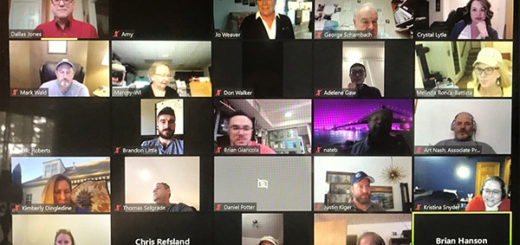
The 34th AARST International Radon Symposium and Trade Show, held November 9 to 13, 2020, was completely virtual.
The 34th AARST International Radon Symposium and Trade Show, held November 9 to 13, 2020, was completely virtual.
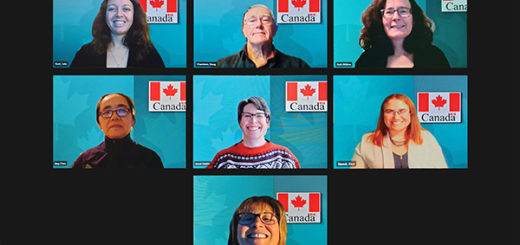
The entire world had to reinvent the way they work in response to the global pandemic, and the UNSCEAR Scientific Committee was no different.
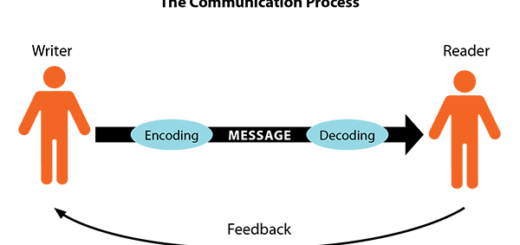
In this article, we’ll explore the communication process and your role in that process as a writer.
Radon is the leading cause of lung cancer in non-smokers and is estimated to cause the deaths of over 3,000 Canadians each year.
Radiation protection specialists are used to thinking of radiation in terms of dose. Radon, on the other hand, is normally referred to in terms of its concentration in air, or in terms of its contribution to overall annual dose as part of natural background radiation.
In this issue, Dave continues his interview series by talking with Karen Owen-Whitred, the new director general of the Directorate of Nuclear Substances Regulation (DNSR) at the Canadian Nuclear Safety Commission (CNSC).
In his November 2019 President’s Message, Ed Waller said radiation safety professionals “are good at understanding the technical side of radiation exposure, statistics, and uncertainty, but . . . are often not good at translating these important technical concepts into readily digestible (yet accurate) explanations for the non-technical expert.”
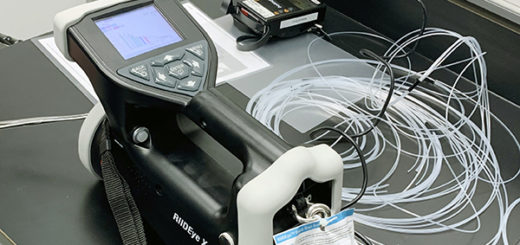
Recently, at one of our local hospital sites, a sealed sharps container triggered the high alarm at one of our waste portal monitors. … This incident confirmed for us that we needed to invest in a more suitable instrument to efficiently and accurately identify radioisotopes.
In November 2019, ICRP held its 5th International Symposium on the System of Radiological Protection in Adelaide, Australia. The theme for the symposium was Mines, Medicine, and Mars.